
Thornton Resident Lookup Coverage
Each row in a Thornton resident lookup answers a different question. Property data can locate a parcel and named owner. A voter file can show a dated registration. A court docket can show a party and hearing event. A vital record can document an eligible event. A business or license record can show a filing role. A directory or obituary can add historical context. No source combines current identity, current address, and household composition.
| Record | What It Confirms | Where | Access |
|---|---|---|---|
| Assessor and GIS | Parcel, owner field, situs and mailing address | Adams QuickSearch/GIS or Weld portal | Online property search |
| Recorded documents | Grantor, grantee, legal description and reception date | Adams Landmark Web or Weld EagleWeb | Index, image, or request |
| Voter records | Dated registration name, address, party and participation fields | Colorado self-lookup or Adams files | Self-check or dated download |
| Court records | Case number, party role, hearing, disposition or document lead | Colorado Judicial and Thornton Municipal Court | Docket or record request |
| Vital records | Eligible birth, death, marriage, civil-union or divorce record | CDPHE, county, court, or Archives | Eligibility and ID required |
| Business and licenses | Entity, agent, license, profession, city or ZIP role | Colorado SOS and DORA | Public role-specific lookup |
The word “resident” should be treated as a research question until the record type is clear. Keep the source date and role beside every name.
Resolve a Thornton Name
Same-name collisions are the central problem in a Thornton resident lookup. Compare spelling, middle initials, suffixes, former names, city or ZIP, record date, parcel, age or birth year when lawfully visible, and the role attached to the name. A property owner, voter, court party, applicant, agent, licensee, or obituary subject is not automatically the same person as another entry with matching first and last names.
Use a full name and every harmless clue already in hand. Search the Adams property roll, then compare a dated voter record, court case number, recorded document, business detail, or library source. A missing match may reflect the Adams-Weld boundary, a protected address, an old Eastlake label, a sealed file, or a portal that does not expose historical coverage.
Identity check: Can the result be tied to the same place, date, role, and official record number? If not, label it as a possible match rather than a confirmed resident.
Thornton Owner, Voter, and License Leads
Property, voter, and license records form a useful three-way comparison. The Adams parcel layer can show owner variants, situs, mailing address, parcel number, and legal fields. Adams Elections provides dated Registration Master List and Voting History files, with protected addresses and specified identifiers withheld. DORA’s public lookup can show a license type, name, business, city, state, and ZIP. The Colorado SOS registry can show an entity’s principal or mailing role.
These sources describe different relationships to place. A mailing address can be outside Thornton. A voter file is a snapshot. A license profile is a credential record. An SOS address belongs to a filing role. Compare dates and labels before treating two entries as one person.
The Adams voter-list route shows the master-list and history access pattern used in this Thornton resident lookup.
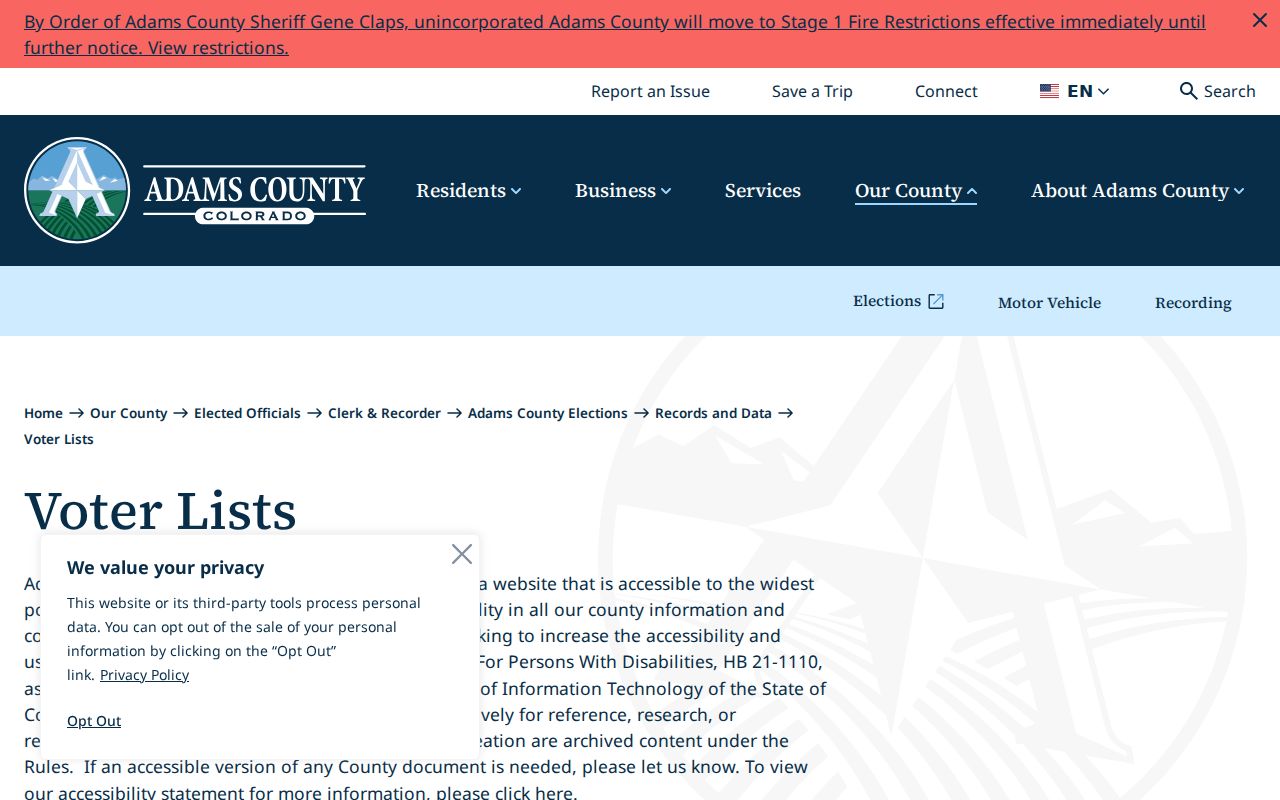
Preserve the file name or snapshot date. A later download may have different fields and a different omission set.
Thornton Court Dockets and Documents
The Colorado Judicial docket search supports location, district, county, courthouse, court type, division, date range, year, case class and sequence, party, and attorney fields. At least one non-date filter is required. A result can expose date, time, duration, name, case number, hearing type, location, appearance type, and courtroom. These are event fields. They do not by themselves establish a final disposition or current identity.
For a document, the Colorado court-record request asks for county, case type, year, party information, date of birth when relevant, document type, certification choice, and contact details. The request route generally answers within three business days, though an extension can apply. Restricted, juvenile, sealed, probate, or confidential material may require identity proof, party status, or a court order.
The Colorado Judicial docket search is the correct first court route for an Adams name lead. The separate Adams Sheriff inmate search is shown here because custody results should not be confused with a court docket.
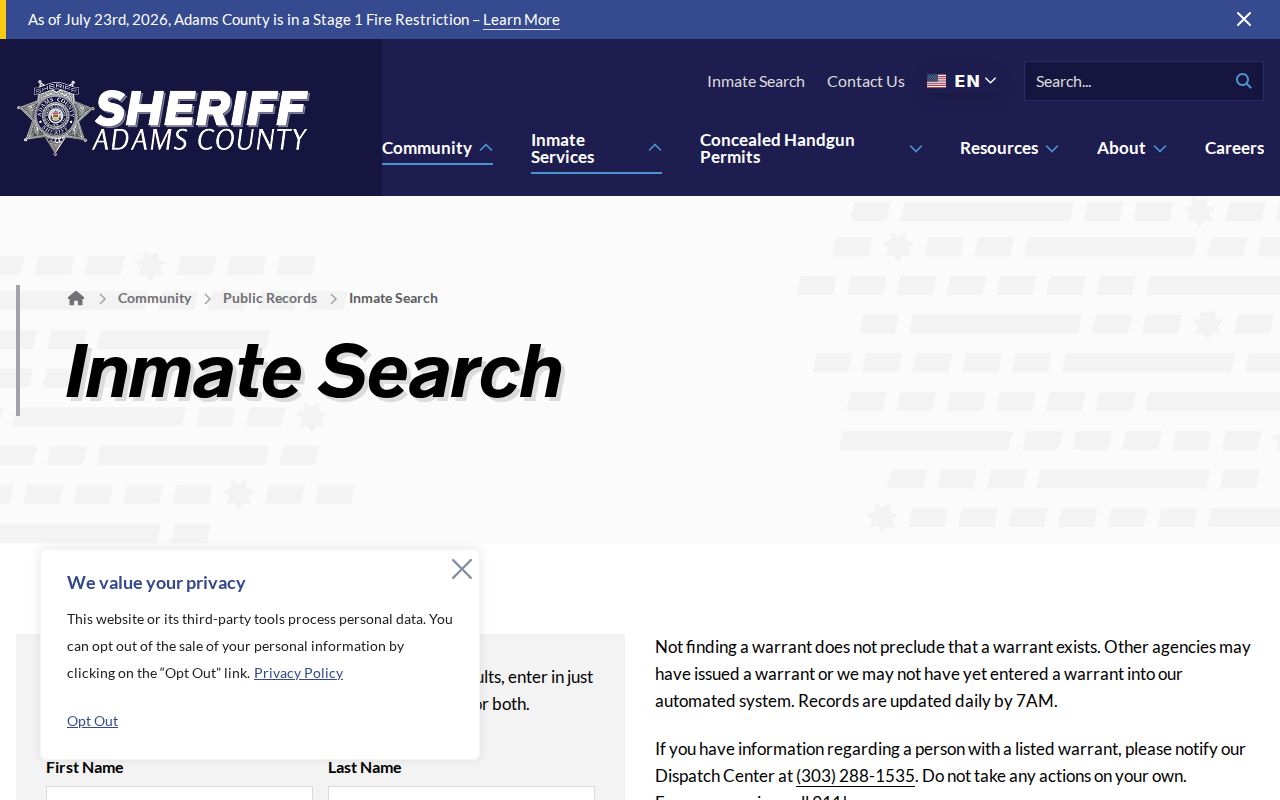
The visible Adams Sheriff form is a separate custody search, a reminder to keep court events and detention status in distinct record categories.
Thornton Vital Records Eligibility
Colorado certified vital records are confidential under C.R.S. §25-2-117. CDPHE and eligible county offices require identity and relationship or direct tangible interest. Adams County Health Department’s birth application asks for the registrant, event date and place, parents, requester relationship, purpose, ID or proof, signature, and payment. A public obituary, city directory entry, or newspaper notice can suggest a date or place, but it does not open a certificate to anyone.
Marriage and civil-union licenses route through a county clerk or recorder. Divorce files route through the court. State Archives holds eligible historical Adams series, including 1902-1907 birth and death material, historical marriage series, probate, divorce, and naturalization records, with series-specific rules. A current birth-parent question is not solved by a public birth index; use the official confidential process when one applies.
The Adams birth application makes the eligibility gate visible for a Thornton resident lookup.
Match the requested record type to the custodian before sending ID or payment. A request for a lead is not the same as a request for a certified copy.
Thornton Probate and Heir Leads
Probate can help when the goal is to understand an estate or identify a former owner’s representative. A court file may contain a petition, letters, will, claim, closing, or other estate material. The Colorado court-record request separates probate document choices and asks for a date of death when relevant. Access to guardianship, conservatorship, minor, sealed, or confidential parts can be narrower.
Adams historical probate holdings at State Archives are listed for 1902-1962. A former owner can also lead to an obituary in HeritageHub or a newspaper, then to a probate case or deed. Keep the chain in order: obituary date, court county, case number, party role, document type, and parcel legal description. An heir name in a case is a record fact, not a general conclusion about a family.
For an older Thornton address, combine the probate lead with the recorder’s grantor-grantee index and a historical directory. The result is stronger when each source repeats the same address, place label, or relationship.
Thornton Address-to-Name Trail
When the starting clue is an address, work from parcel to person. First save the current owner, parcel number, situs and mailing fields in Adams GIS or the Weld portal. Next search the deed as a grantee, read the grantor, and repeat backward. Then compare the seller or former owner with a directory, obituary, probate file, permit role, or dated voter source. This separates an address history from a claim about who occupied it.
- Anchor the address to a parcel and legal description.
- Anchor the current owner to a recorded reception number and document image.
- Anchor the prior owner to the same legal description or plat.
- Use the library or newspaper layer for a period household clue.
- Record a source date and label every name by role.
The full address-keyed process belongs in the street directory, while historical directory collections belong in the city directory. A name search should not rebuild either source without the address or collection context.
Thornton Custody and Registry Checks
The Adams Sheriff inmate search shows current detention-facility results from first-name and last-name fragments. The page recommends trying the first few letters and provides no historical roster period. The Colorado Department of Corrections locator is an official current gateway, but its complete live fields were not exposed in the capture. The federal BOP locator searches a name or BOP or INS register number, with federal records generally reaching from 1982 forward.
The Colorado sex-offender registry requires an agreement before its search fields appear. The registry says it is incomplete, mapped locations are approximate, updates occur hourly, and statutory exclusions apply. CBI’s name-based history is one person at a time, fee-based, and excludes sealed, juvenile, warrant, and some traffic material.
The Colorado registry entry shows the agreement and approximate-map warning.
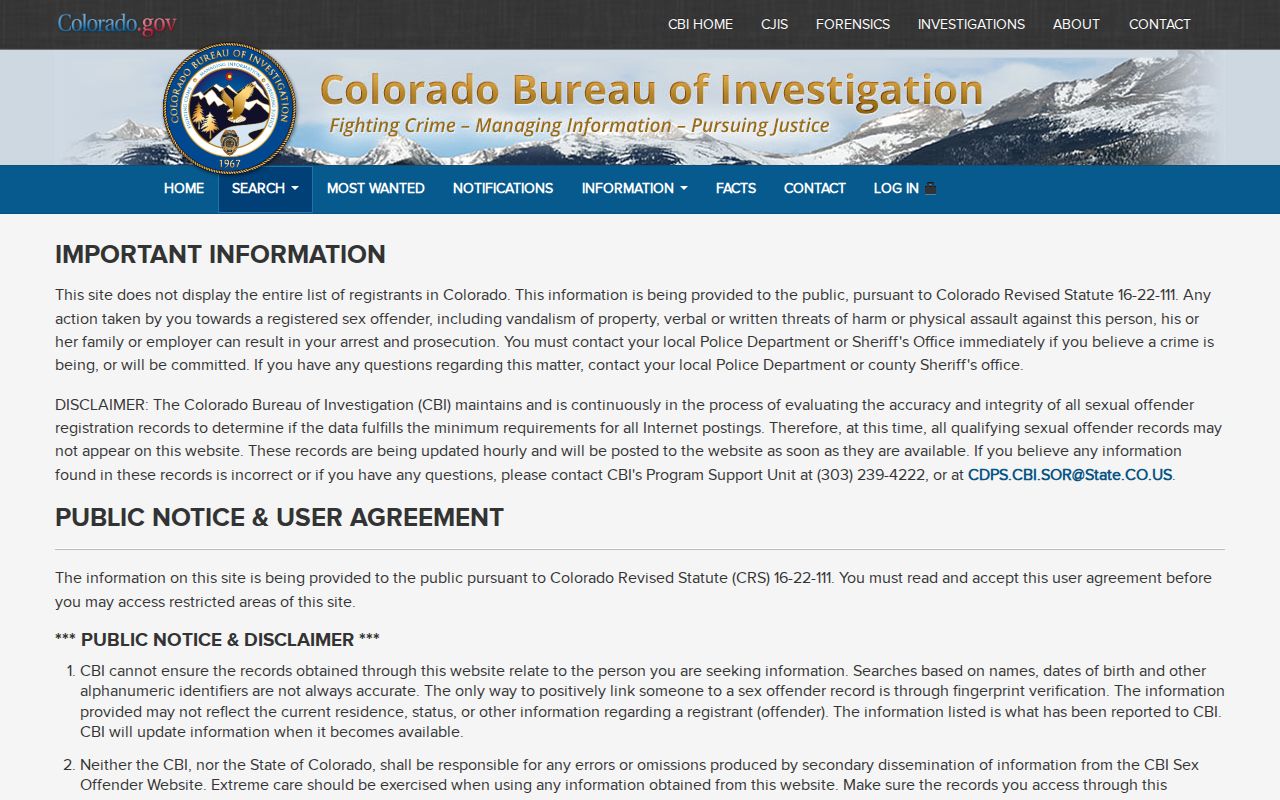
Never treat a registry lead, arrest lead, or custody snapshot as a complete identity record. Preserve the exact system and access date.
The Colorado name-based history search is another separate record channel with one-person-at-a-time limits.
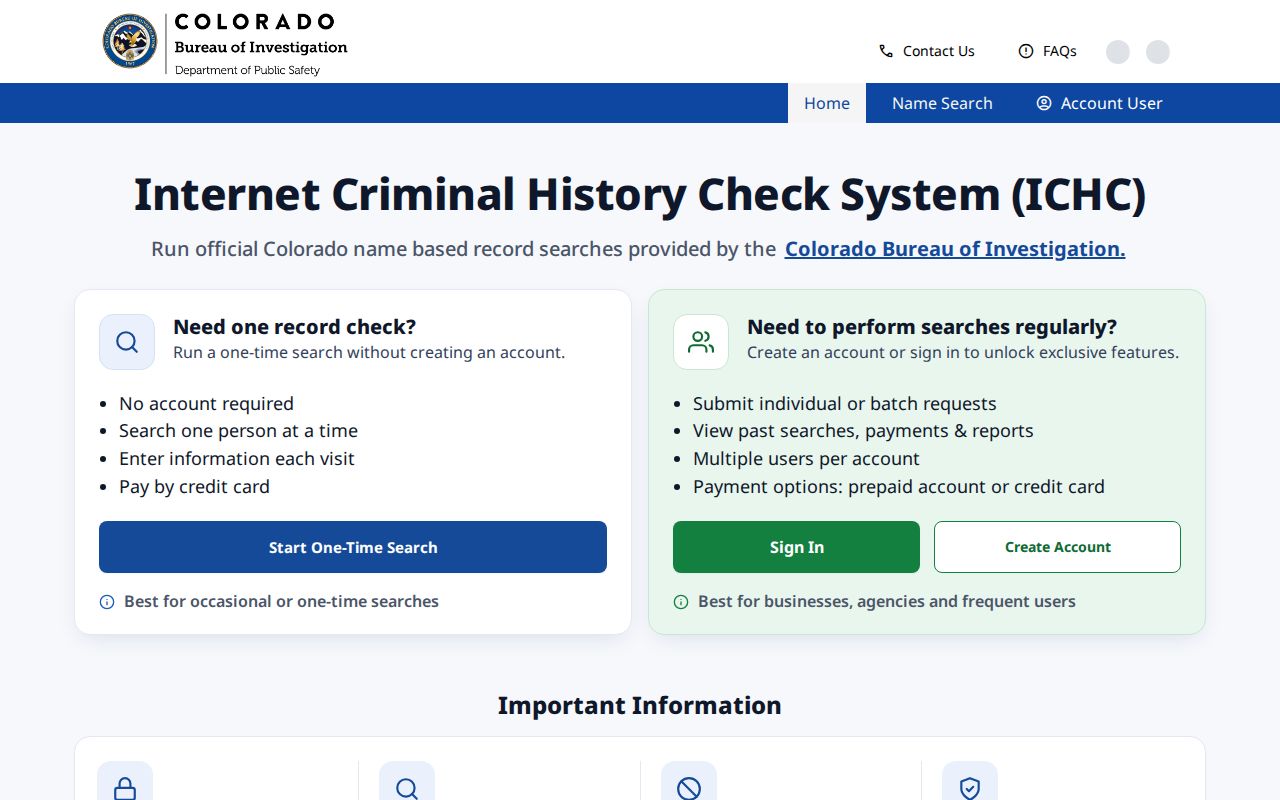
CBI results can contain possible matches and exclusions, so read the disposition and identity fields rather than treating a name hit as a conclusion.
Thornton Business Filing Cross-Check
A business filing can help distinguish two people with the same name when one holds a public entity role. Colorado SOS search fields include business name, trademark, trade name, ID, and document number. Detail pages can show status, formation date, principal office, mailing address, registered agent, filing history, good standing, and document images. A role address is a business record, not proof of personal residence.
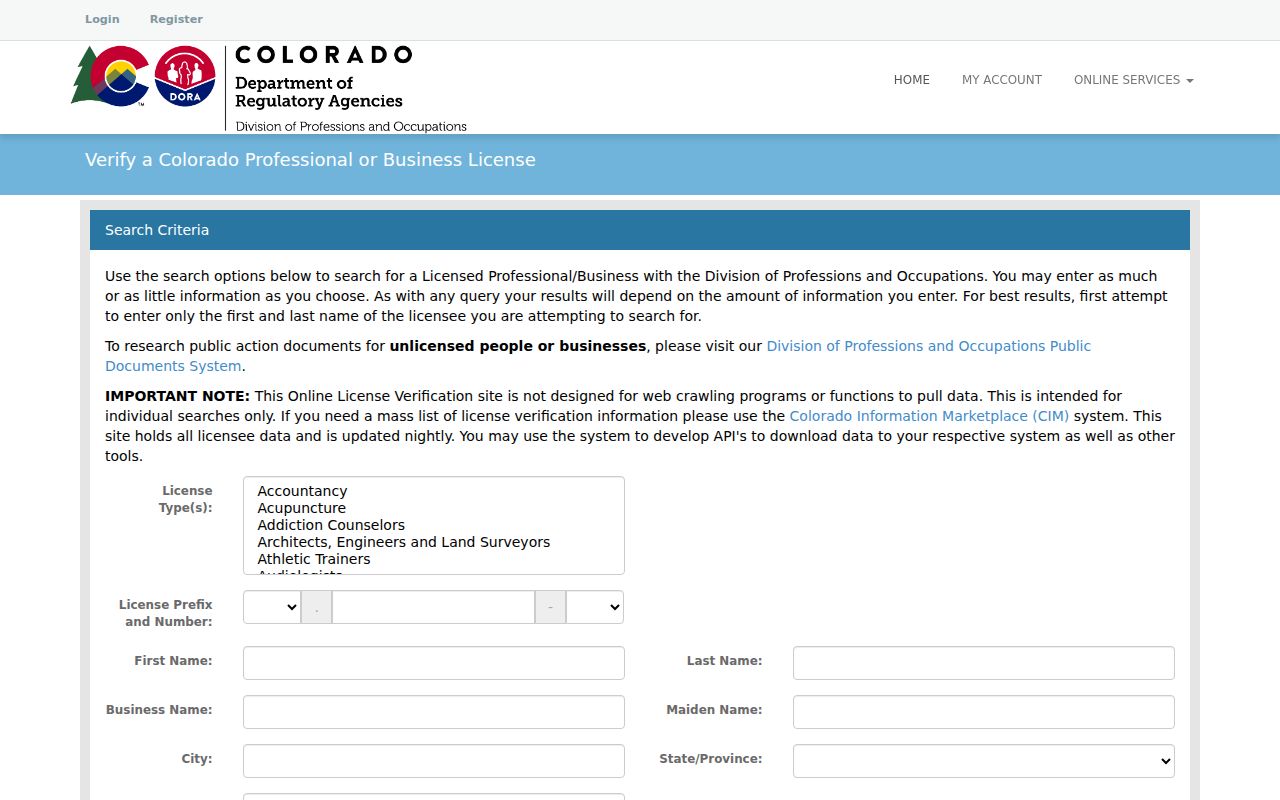
DORA’s public license lookup includes license type, prefix and number, first and last name, business name, city, state or province, ZIP, and a security code. It is updated nightly, and its profile fields depend on the profession. Use the name, city, ZIP, license type, and date together. A license profile can confirm a credential, not the private details of a household.
The DORA license lookup capture shows the public field set for a Thornton name search.
Keep a license number or entity ID when available. It is more useful than copying a name without its public role.
Thornton Records Request Fallback
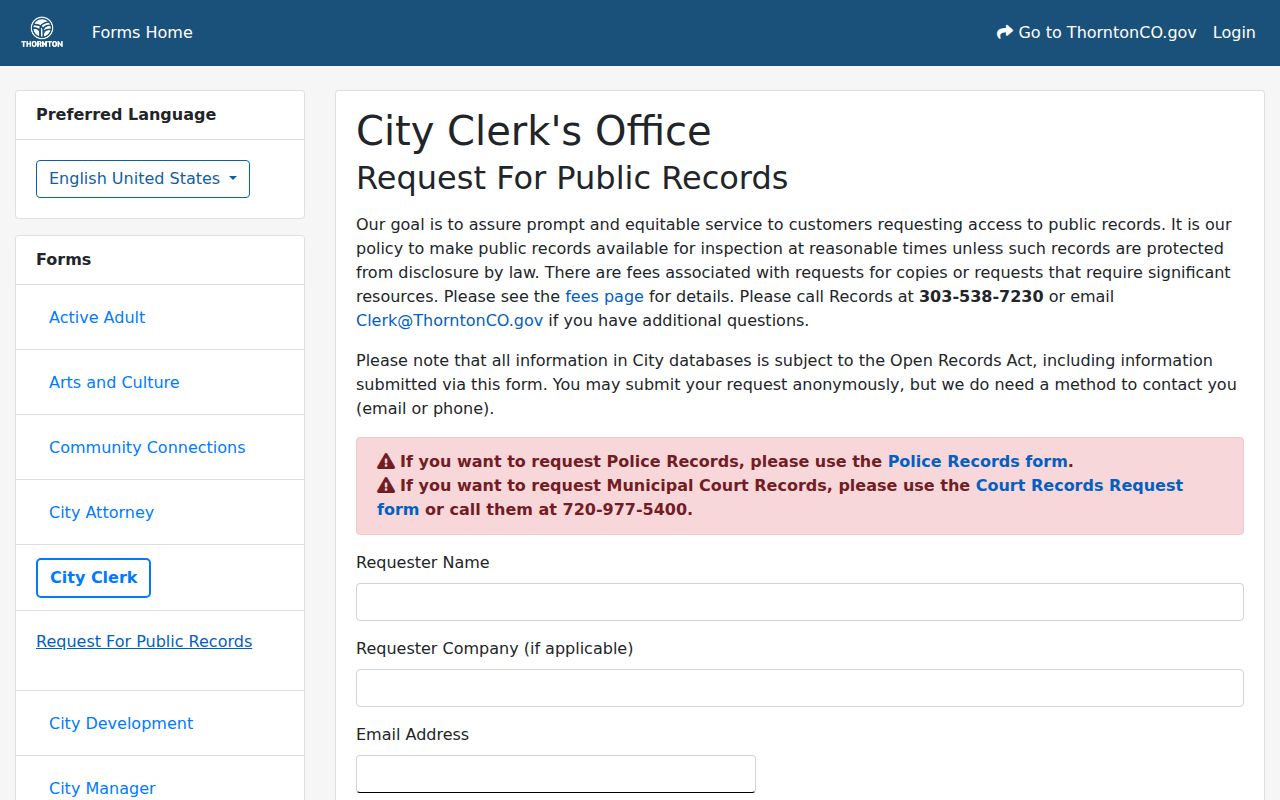
Not every Thornton record has an online search. The City Clerk CORA form accepts a property address, date range, documents, and additional items, along with a response channel. Adams County requests should name the department and record type. Colorado’s Open Records Act, C.R.S. §§24-72-200.1 through 24-72-205, generally gives a three-working-day response framework, with a possible seven-working-day extension for extenuating circumstances.
For court documents, use the state request form. For vital certificates, use the eligible office. For historical material, use State Archives, Anythink, Denver Public Library, or the Adams County Museum. State the full name, variants, old and current address, parcel, legal description, record dates, and acceptable format. Ask the custodian to cite an exception when a record is withheld.
The Thornton City Clerk public-record request capture lists the fields that turn a vague name search into a workable records question.
A clear request creates a response that can be cited, corrected, or narrowed. It is also the right fallback when a portal’s JavaScript shell hides the controls.
Thornton Lookup Privacy Boundaries
Colorado’s Address Confidentiality Program gives eligible survivors a legal substitute address and mail forwarding for four years before re-enrollment. Voter protections, sealed cases, juvenile restrictions, suppressions, confidential vital records, and the federal Driver Privacy Protection Act create other limits. A public result can be absent for a lawful reason.
Use a resident lookup for a lawful personal purpose. Do not use a name, address, docket, registry, voter record, or property result to stalk, harass, intimidate, threaten, or harm anyone. Verify with the custodian before relying on a record.
Commercial people-finder products are a separate data-broker category. They can merge public and brokered data, stale addresses, or same-name records, and they may omit protected people. The safer practice is to use the primary custodian, document the source date, and call a result a lead until the role and place match.