
Thornton City Directory Holdings
The official Thornton sources reviewed do not publish a complete local shelf-run list. The reliable starting point is a title page that names the municipality, publisher, edition, and coverage, followed by a check of the name and street sections. Regional holdings can contain Thornton entries, but a Denver label alone does not prove that the volume covers every Thornton neighborhood. The holdings below separate discovery tools, printed runs, licensed databases, and local history custodians.
| Collection | Years | Where Held | Access |
|---|---|---|---|
| Colorado Directories Index | Municipality, county, and year entries | Denver Public Library online | Search the PDF, then inspect the cited volume |
| Denver city directories, including selected Polk editions | 1866 to 1981 microfilm; selected print years | Denver Public Library and licensed databases | Library or licensed access; verify Thornton coverage |
| Digitized Denver directories | 1873 to 1923; 1924 to 1937 | Denver Public Library digital collection | Online viewer when the item is available |
| Householder and criss-cross directories | 1924 to 2018 documented Denver run | Denver Public Library | Street-arranged volumes; place coverage varies |
| Anythink history and genealogy databases | HeritageHub notices from 1704 to today; other licensed runs vary | Thornton branches and online resource page | Branch or remote access depends on the database |
| Adams County historical collections | Series-specific | Adams County Museum and Colorado State Archives | Call ahead, request records, and follow eligibility rules |
The gaps are part of the evidence. A missing Thornton edition may reflect a regional title, a publication pause, a library licensing limit, or a volume that was never cataloged online. An entry should retain its exact year, publisher, municipality, page, and printed abbreviation. That citation lets a later researcher distinguish a Thornton city directory from a Denver directory that merely served a nearby telephone exchange.
Search Thornton's Directory Index
The Colorado Directories Index is a discovery aid organized by municipality, county, and year. Its living index is more useful than a broad web search because it points toward a particular title or telephone book. The index guidance recommends searching the PDF for “*Thornton.” That result still needs a title-page check. Record the place wording exactly as printed, especially when a source uses Eastlake, Adams County, or a former postal last line.
The index capture is a discovery aid, not proof that every listed volume is open.
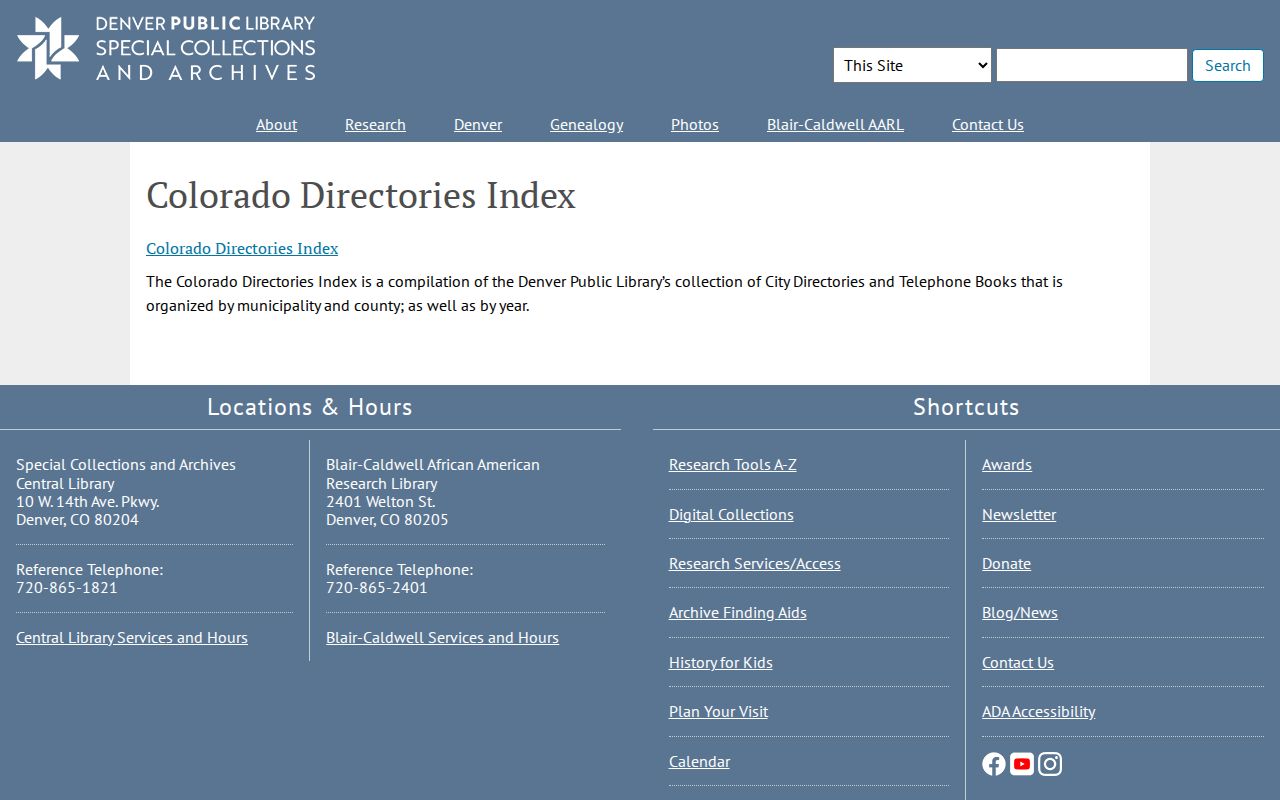
Use the index to locate an edition, then cite its page or reel. Keep both references to guard against OCR and place-name errors.
- Search the index for Thornton and nearby historical place labels.
- Write down the title, publisher, municipality, year, and holding institution.
- Open the volume or request it through the named library or archive.
- Confirm the printed page, section, address, and abbreviation key before copying a name.
Thornton Directory Year Runs
Denver Public Library documents several regional runs that may help with Thornton research. Denver city directories extend on microfilm from 1866 to 1981. Digitized material in the Denver Public Library digital collection covers 1873 to 1923 and 1924 to 1937. Selected Polk hardcover years include 1899, 1913, and 1960 to 1996. Householder or criss-cross volumes arranged by street are documented from 1924 to 2018. Colorado business directories cover 1875 to 1943, 1950, and 1956. These are holdings and date spans, not a promise that every edition contains Thornton.
The Denver building-history research path explains why directory work often needs several shelves. A name section can find a household, a street section can find an address, and a map or newspaper can test the result. An older book may also use a route, a neighborhood label, or a telephone exchange instead of the modern city name.
Note: A volume's municipality line matters more than a familiar title when Thornton appears inside a regional Denver run.
Reading a Thornton City Directory
A Thornton city directory entry is a dated snapshot, not a claim that one person occupied a property every day of the year. Read the title page first. Then note whether the line comes from an alphabetic name section, a street or criss-cross section, a business list, or a separate civic section. Spelling, initials, household notes, and address formats can change between editions, so the page number and printed marks matter as much as the name.
| Alphabetic name | Name, initials, and sometimes spouse or household notation |
|---|---|
| Street address | House number, street, route, apartment, or post-office wording |
| Street entry | Address followed by an occupant, householder, or owner and renter mark when printed |
| Period role line | Occupation or firm description used as context, not proof of residence |
| Move or death clue | Widow, forwarding, or similar notation when the edition prints one |
| Authority details | Publisher, edition, year, section, page, and the abbreviation key |
- Criss-cross directory
- A street-arranged directory that starts with an address and points toward an occupant or household name.
- Householder index
- An address or household arrangement that can reveal a name when an alphabetic search is uncertain or incomplete.
- Abbreviation key
- The volume's explanation of short forms and symbols. Read it before interpreting owner, renter, boarder, or household marks.
Thornton's 1950s Directory Context
Thornton's city-era record trail starts later than Adams County's. The city's history records Sam Hoffman's 1952 purchase of 400 acres of the Eppinger farm, first homes in 1953, the arrival of the first 40 families on January 31, 1954, and incorporation on May 26, 1956. The city covered one square mile at incorporation. Those dates explain why a directory entry before the municipal era may use a county, farm, railway, or postal description instead of Thornton.
| 1952 | Sam Hoffman bought 400 acres of the Eppinger farm. |
|---|---|
| 1953 | The first homes appeared in the planned community. |
| January 31, 1954 | The first 40 families arrived. |
| May 26, 1956 | Thornton incorporated as a city. |
| 1990 | Eastlake became part of Thornton, adding another historical place label. |
The city history record and the accepted historic-preservation plan give the place context that a directory title may not. Search both Thornton and Eastlake when an older family, newspaper, or address entry falls near the city's early growth. Keep the original wording beside the modern location rather than silently normalizing it.
Thornton Directory Library Access
Anythink is the practical first stop for local history access. Thornton branches include Huron Street at 9417 Huron Street, Thornton Community Center at 2211 Eppinger Boulevard, and Wright Farms at 5877 East 120th Avenue. The History and Genealogy resource page lists HeritageHub, MyHeritage, History Reference Source, and Ancestry Library Edition in branches. These tools can supply obituaries, newspapers, genealogy records, or licensed directory material, but the public page does not list a complete Thornton city directory shelf run.
Access can differ by resource. A database may allow remote use, require a library card, or work only on a branch computer. Microfilm and print volumes may require an in-person visit and a reader. Ask staff for the exact title, year, municipality, and publisher before assuming that a search result represents Thornton. A phone call, email, or branch visit can resolve a shelf question faster than repeated name searches.
The Anythink locations record helps establish which branch is nearby, while the local-history staff can determine whether a particular directory, newspaper, or yearbook is licensed or held locally.

Note: A library database may show an index while the original page, microfilm reel, or licensing rule requires a branch visit.
Thornton Historical Collections Beyond Directories
The Adams County Museum and Historical Society in Brighton is a local contact for donated papers, photographs, maps, and other historical context. The museum lists public hours Tuesday through Saturday from 10 a.m. to 4 p.m. at 9601 Henderson Road and asks researchers to call ahead. Its public site does not publish a directory-year catalog or fee schedule, so an inquiry should name the person, address, place label, and date range rather than asking for a broad resident list.
Colorado State Archives supplies series-specific routes for Adams births and deaths, historical marriage certificates and licenses, probate, divorce, and naturalization material. Birth records held there must be at least 100 years old under the access guidance inspected. The Archives request process is the correct fallback when a historical directory points to an event that a modern vital-record office cannot release. Eligibility, identification, and the exact series control access.
The Adams County Museum access point reflects a local collection contact, not a searchable name index.
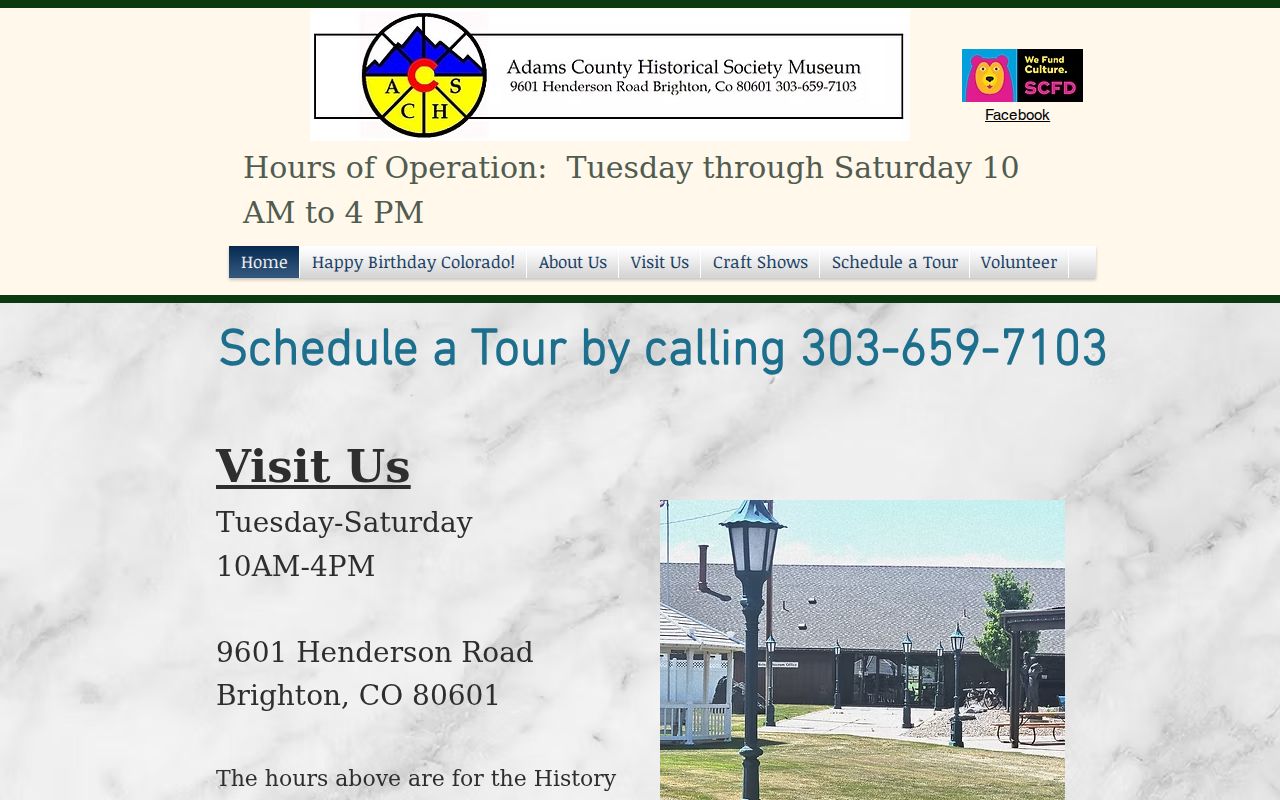
The image records a local-history contact for Thornton directory research.
Thornton City Directory Newspaper Bridges
Newspapers and obituaries can connect two directory years when a name disappears, an address changes, or a household moves between place labels. Anythink's HeritageHub description covers U.S. obituaries and death notices from 1704 to today. Denver Public Library also identifies the Denver Post historical image collection, the Denver Obituary Project from 1913 to 2016, Colorado obituary resources, Colorado Historic Newspapers, and Chronicling America as regional search paths.
The Colorado Historic Newspapers collection describes more than 740 newspapers with coverage from 1859 to 2023 in the research material. Title coverage varies, so search results should retain the newspaper name and page rather than citing the collection as a whole.
The Anythink History and Genealogy resource supplies the HeritageHub route.
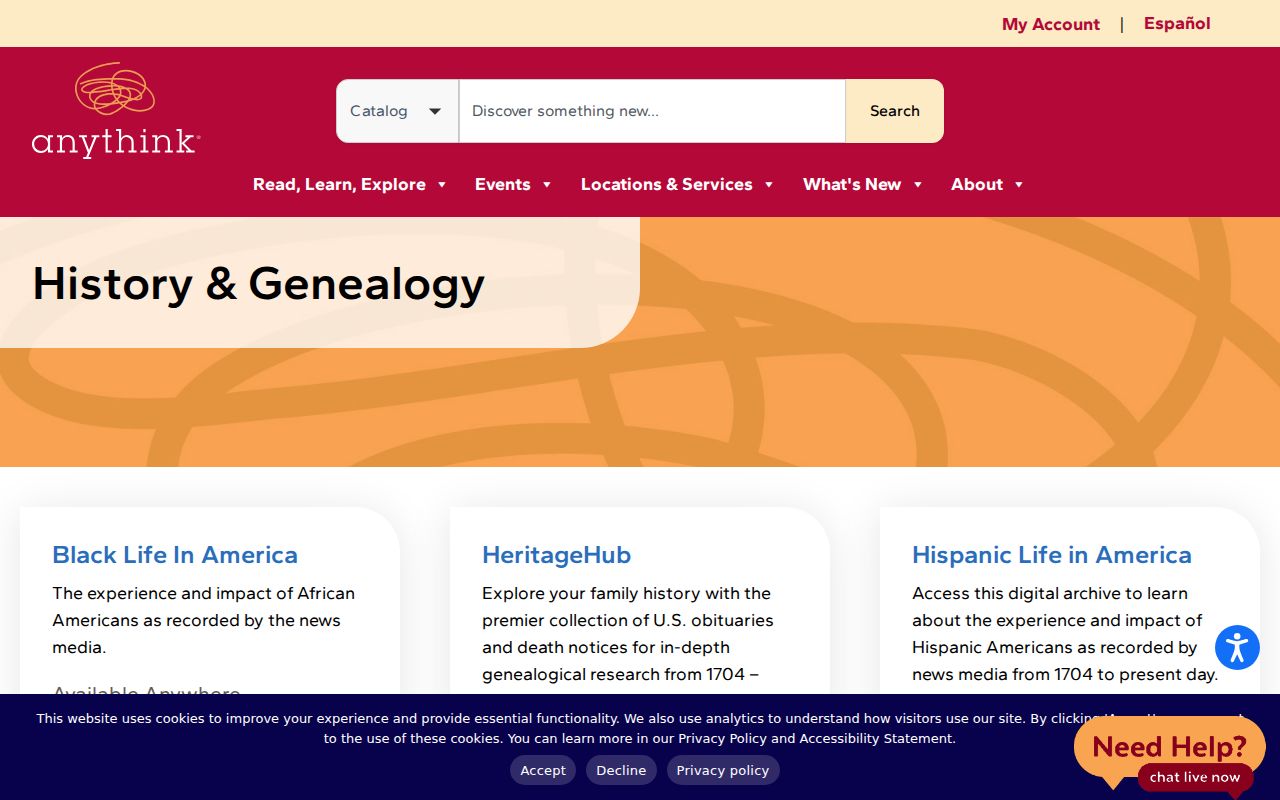
Its obituary and newspaper tools can connect a directory entry to a dated notice, but each result needs its title and page.
Sanborn Maps and Thornton's Directory Context
Sanborn fire-insurance maps can date a structure, footprint, street name, or land use, but the documented regional runs here are Denver maps, not Thornton-specific volumes. Denver Public Library lists 1887; 1890 to 1893; 1903 to 1904 with pasteovers through 1925; 1929 to 1930 with pasteovers through 1961; 1962; and an incomplete 1974 run. Check the map's municipality before assigning a sheet to a Thornton address.
A map and a directory answer different questions. The map describes a building or lot at a point in time. A directory supplies a name or address entry when the volume covers that place. Pair either with a deed, permit, plat, census schedule, or newspaper, and keep the date and source type next to the conclusion.
Place check. A Denver map or directory can support Thornton research only after the municipality, address form, and historical place label have been verified.
Tracing a Thornton Household Across Editions
For family history, begin with a known name, address, or relationship and work across editions instead of reading one line in isolation. The goal is a dated sequence: a person appears at one address, the address changes or stays stable, and another source explains the gap. Census schedules are released under the 72-year rule, so they can fill a different time slice than a directory.
- Write down the exact title page, publisher, municipality, edition year, and page where the first entry appears.
- Search the alphabetic name section, then check the street or criss-cross section for the same address.
- Compare the next available edition and record changes in initials, spouse notation, address, role line, and printed marks.
- Pair the directory snapshot with an available census schedule, deed, permit, newspaper, or obituary.
- Resolve a move, death, or missing year with the named custodian, an archive request, or a second original source.
A person can disappear because the next volume covers another municipality, uses another telephone exchange, prints only a head of household, or falls between editions. The absence does not prove a move or death. When the question shifts from how a volume works to the backward history of one address, the the past residents page page keeps that deed and occupancy trail separate from the collection description.